Loading
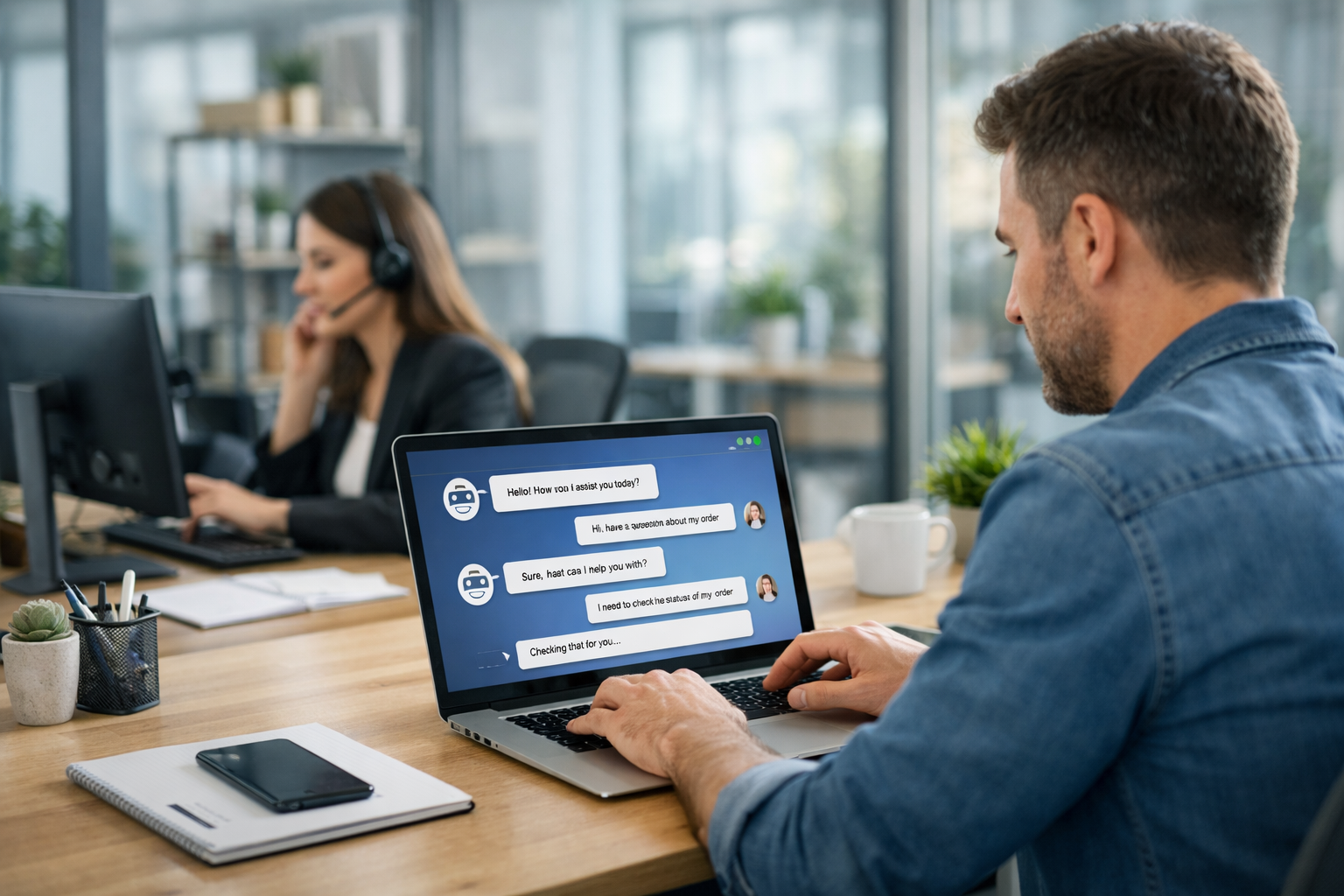
Implementing a chatbot is no longer optional for small and medium businesses (SMBs). Customers expect instant responses, 24/7 availability, and seamless support across channels. But simply installing a bot is not enough. To see real results in lead generation, customer satisfaction, and sales, you must follow proven AI chatbot best practices for small and medium businesses.
This guide explains exactly how to plan, deploy, and optimize an AI chatbot so it drives measurable business growth—without overwhelming your team or your budget.
The most common chatbot mistake is launching without a defined purpose. Before implementation, identify what you want your chatbot to achieve.
For SMBs, clarity is critical because resources are limited. A chatbot focused on lead qualification and basic support often delivers the highest ROI.
For example, with our AI and human support services, businesses deploy a single gadget that handles AI chat, live text chat, voice, and video—ensuring both automation and human backup align with specific goals.
Generic chatbots give generic answers. That hurts credibility and trust.
One of the most important AI chatbot best practices for small and medium businesses is training the AI on your actual website content, FAQs, services, policies, and product details. This ensures:
When your chatbot understands your pricing structure, service process, and policies, it becomes a true digital team member—not just an automated responder.
AI is powerful—but it is not perfect. Complex questions, emotional conversations, and high-value sales opportunities require human judgment.
SMBs that see the best results use a hybrid model:
This prevents the biggest risk of chatbot deployment: customer dissatisfaction due to rigid automation. A hybrid AI + human solution ensures customers always have a path to real support.
With Biz AI Last, businesses get trained AI plus live human agents available 24/7 via text, audio, and video chat—within a single embeddable gadget.
Small businesses often overcomplicate chatbot flows. The goal is clarity, not complexity.
Follow these conversation design best practices:
Your chatbot should reduce friction, not create it. If users feel confused or trapped, they will leave your website.
For SMBs, lead generation is often the primary goal. However, intrusive pop-ups or early data requests can hurt conversions.
Best practice is to:
For example: “Would you like us to send you a custom quote? I can have a specialist reach out.”
This approach increases trust and significantly improves conversion rates.
Small and medium businesses often lose leads outside business hours. A chatbot solves this problem—but only if it is fully operational at all times.
Ensure your chatbot:
Round-the-clock availability creates a competitive advantage, especially against larger companies with slower response systems.
Customers move between chat, calls, and video interactions. Your chatbot should not operate in isolation.
Best practice is using a single solution that covers:
This unified approach prevents communication silos and improves the customer experience. It also makes management easier for small teams.
Launching a chatbot is step one. Optimizing it is where real growth happens.
Track these key metrics:
Review transcripts regularly to identify weak spots. Are customers asking questions the bot cannot answer? Update training data accordingly.
SMBs must handle customer data responsibly. Your chatbot should comply with privacy regulations and store information securely.
Make sure to:
Trust is essential for long-term business growth.
Budget matters for small and medium businesses. Expensive enterprise platforms often provide features SMBs do not need.
Look for solutions that:
For many SMBs, starting from around $300 per month delivers enterprise-level support without hiring full-time staff. You can view our pricing to see how a hybrid AI + human model compares to in-house staffing costs.
A chatbot should enhance customer relationships—not replace them entirely.
The most successful AI chatbot best practices for small and medium businesses revolve around balance: automation plus human expertise, efficiency plus empathy, technology plus trust.
When implemented strategically, a chatbot can:
If you are ready to implement a chatbot that is trained on your website and backed by real human agents, book a free demo today and see how Biz AI Last can transform your customer support and lead generation strategy.
With the right strategy and the right partner, your chatbot becomes more than a tool—it becomes a growth engine.
Join businesses using Biz AI Last to capture more leads and deliver exceptional support around the clock.
See How Biz AI Last Works