Loading
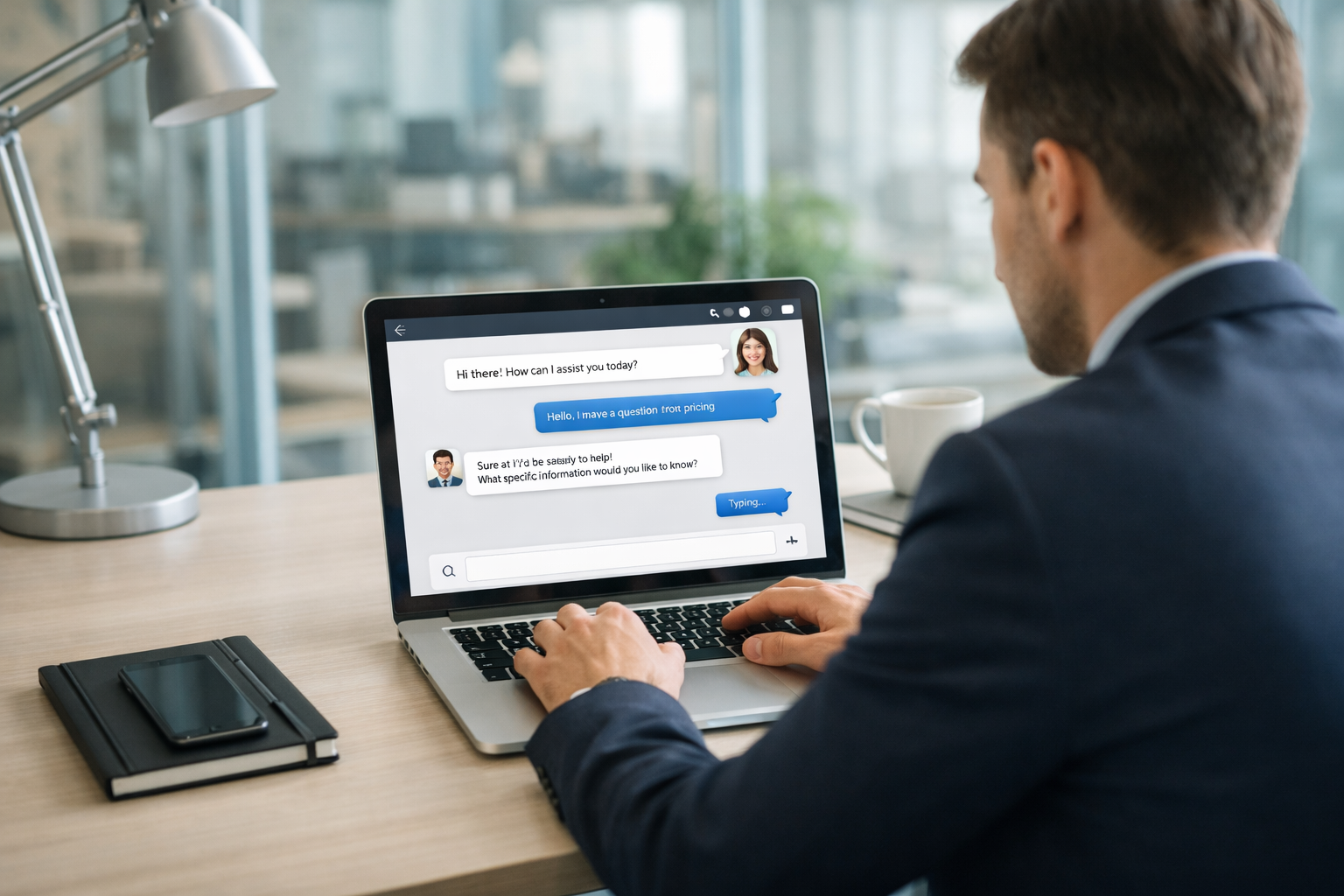
AI chatbot personalisation is no longer a “nice-to-have” feature. If you want higher conversions, better engagement, and stronger customer relationships, you must tailor responses by visitor type, behaviour, and intent. A generic chatbot gives generic results. A personalised chatbot drives measurable growth.
In this guide, we break down exactly how AI chatbot personalisation works, how to tailor responses by visitor, and how businesses can implement it effectively using a hybrid AI + human support model like Biz AI Last.
AI chatbot personalisation means dynamically adjusting responses based on who the visitor is, what they’re doing, and what they need at that moment. Instead of delivering the same scripted answer to everyone, the chatbot uses data signals to customise:
This approach mirrors what a skilled human sales or support agent would do naturally: assess the situation and respond accordingly.
When visitors feel understood, they engage more. Personalised chat experiences:
For example, a returning visitor browsing pricing likely needs reassurance or a final push — not a generic “How can I help you today?” message.
AI chatbot personalisation ensures the right message appears at the right time.
Geo-based personalisation allows your chatbot to:
A visitor from London and one from New York may require different messaging, availability information, or pricing clarity.
Returning visitors are warmer leads. Your chatbot can say:
This creates continuity and shows awareness — a key element of effective personalisation.
Browsing behaviour reveals intent. Examples:
Tailoring responses by visitor page activity is one of the fastest ways to improve conversion rates.
Did the visitor arrive via:
Someone coming from a “best AI support tools” search has research intent. Someone from a branded ad likely has purchase intent. Your chatbot messaging should reflect that difference.
If a visitor spends 3+ minutes on one page without action, your chatbot can proactively offer help. If they scroll quickly across pages, you might prompt with a quick navigation guide.
A visitor adds items to cart but hesitates. The chatbot detects this behaviour and says:
“Need help choosing the right size? I can guide you in seconds.”
If they previously purchased, it may suggest complementary products instead.
On a B2B site offering AI support solutions, a visitor reading about pricing receives:
“Would you like a quick breakdown of which plan fits your business size?”
For enterprise visitors, the chatbot can route them directly to a human specialist via video or voice chat.
With our AI and human support services, businesses can combine intelligent automation with real human agents for high-value conversations.
Pure automation has limits. True personalisation often requires nuance.
That’s where hybrid support stands out:
Biz AI Last offers a single embeddable gadget that covers text, audio, and video chat — powered by AI trained on your own website and backed by real human agents 24/7.
This means your visitors always get context-aware responses, whether automated or human-led.
Generic AI produces generic answers. Training your chatbot on your own website ensures:
Create clear categories such as:
Each segment should have tailored messaging and goals.
Instead of static scripts, build intent-driven pathways:
Even the best AI needs backup. Escalation options should include:
This flexibility increases trust and dramatically improves close rates.
Track these metrics to evaluate performance:
Businesses that implement structured AI chatbot personalisation often see double-digit improvements in lead generation and support efficiency.
If you’re comparing solutions, you can view our pricing to see how affordable a hybrid AI + human approach can be — starting from $300 per month.
Personalisation is evolving beyond basic rules. Modern AI systems now:
In the near future, chatbots won’t just respond — they’ll anticipate needs before visitors even articulate them.
AI chatbot personalisation — how to tailor responses by visitor — is ultimately about relevance. The more context-aware your chatbot is, the more effective it becomes.
By combining behaviour tracking, intelligent automation, and real human agents, businesses can deliver conversations that feel personal, helpful, and conversion-focused.
If you’re ready to transform your website into a 24/7 lead generation and support machine, book a free demo and see how personalised AI + human chat can work for your business.
The difference between a basic chatbot and a personalised one isn’t just technology — it’s revenue.
Join businesses using Biz AI Last to capture more leads and deliver exceptional support around the clock.
See How Biz AI Last Works