Loading
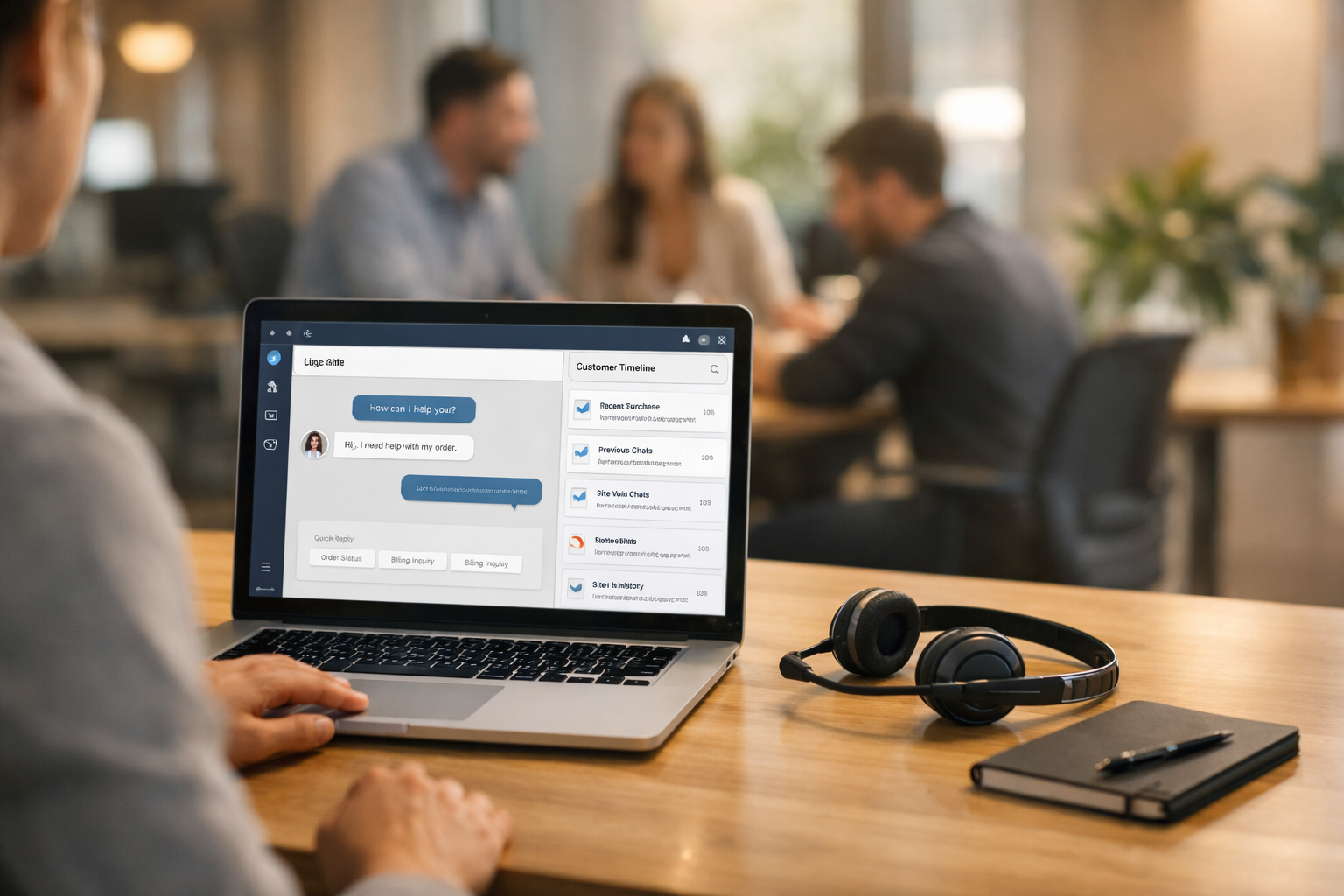
Customer retention doesn’t usually fail because your product is “bad”—it fails because customers get stuck, confused, or feel ignored at the exact moment they need help. Customer retention strategies using proactive support flip the script: instead of waiting for tickets to pile up, you reach customers first with timely guidance, human empathy, and fast answers—24/7.
Proactive support is any customer service action initiated by your business before a customer asks for help. It’s not spammy pop-ups or generic “Need help?” messages. Done well, it’s contextual, helpful, and targeted to moments where customers commonly drop off.
Retention improves because proactive support:
In practice, proactive support combines behavior signals (what a customer is doing), intent signals (what they’re trying to achieve), and smart interventions (the right message, channel, and timing).
Reactive support (waiting for inbound tickets) is necessary—but it’s rarely sufficient for high retention. Many customers who churn never submit a ticket. They just leave. Common reasons include:
Proactive support closes these gaps by meeting customers where they are—on your site, in real time—before a small issue becomes a cancellation.
Map your highest-friction pages and actions: pricing, checkout, onboarding steps, account settings, and cancellation flows. Then add proactive prompts that offer specific help.
The key is to be contextual. A generic greeting doesn’t retain customers; a timely, relevant intervention does.
Retention drops when customers can’t get answers quickly—especially outside business hours. A website-trained AI chatbot can handle repetitive questions instantly and accurately when it has the right knowledge base.
Biz AI Last offers a 24/7 AI chatbot trained on your own website content, so customers get consistent answers aligned with your policies, features, and messaging. When a question requires nuance or empathy, it can escalate to a real person.
Learn more about our AI and human support services.
Some interactions are retention-critical: billing disputes, technical failures, contract questions, or “I want to cancel” messages. Proactive retention means recognizing these moments and routing them to a human quickly.
Biz AI Last supports live human agents for text, audio, and video—helpful when customers need to show a problem, not just describe it.
Onboarding is where retention is won or lost. Proactive support during the first sessions reduces confusion and helps customers reach the “aha moment.”
This can be automated with AI for common questions, while complex setups can be handled via live voice or video for faster resolution.
Customers often show churn intent before they leave. Watch for behavioral indicators:
When you detect these signals, send a proactive message offering help, resources, or a fast escalation path to a human agent.
Retention improves when support doesn’t end at information. Customers want outcomes. Build proactive flows that guide them through completion:
Biz AI Last’s hybrid model is effective here: AI handles the steps quickly, and humans step in when edge cases appear.
Proactive support can also increase loyalty by adding human warmth and credibility. Examples:
When done respectfully, these touches reduce repeat issues and strengthen customer confidence.
Implementing proactive support often fails because teams stitch together too many tools: a chatbot, a live chat widget, separate voice/video platforms, and a disconnected lead form. That fragmentation causes delays and inconsistent service.
Biz AI Last simplifies proactive retention with a single embeddable gadget that supports:
This hybrid approach helps you proactively intercept issues, answer questions instantly, and provide high-touch help when it matters—without forcing customers to wait or switch channels.
If you want to explore what this looks like for your business, you can book a free demo.
Use a mix of analytics and support logs. Typical starting points:
For each moment, decide what proactive support should do:
Keep prompts specific, timed, and limited:
Great retention support sounds like this:
Then document outcomes so AI can learn common paths and reduce future friction.
Measure proactive support by outcomes, not just ticket volume:
Hiring enough staff to cover 24/7, multiple channels, and peak times is expensive. Pure AI can be cheaper but may struggle with complex, emotional, or high-stakes issues. A hybrid model gives you the best of both: AI handles speed and scale, humans handle nuance and trust.
Biz AI Last combines both starting from $300/month. You can view our pricing to see what fits your support and lead generation needs.
Customer retention strategies using proactive support work because they prevent the silent churn that reactive support never sees. The winning approach is simple: identify friction, intervene with contextual help, and escalate to humans at the moments that decide whether customers stay.
If you want a single solution that delivers proactive AI answers plus real human help via text, voice, and video—embedded once on your site—explore our AI and human support services or book a free demo.
Join businesses using Biz AI Last to capture more leads and deliver exceptional support around the clock.
See How Biz AI Last Works