Loading
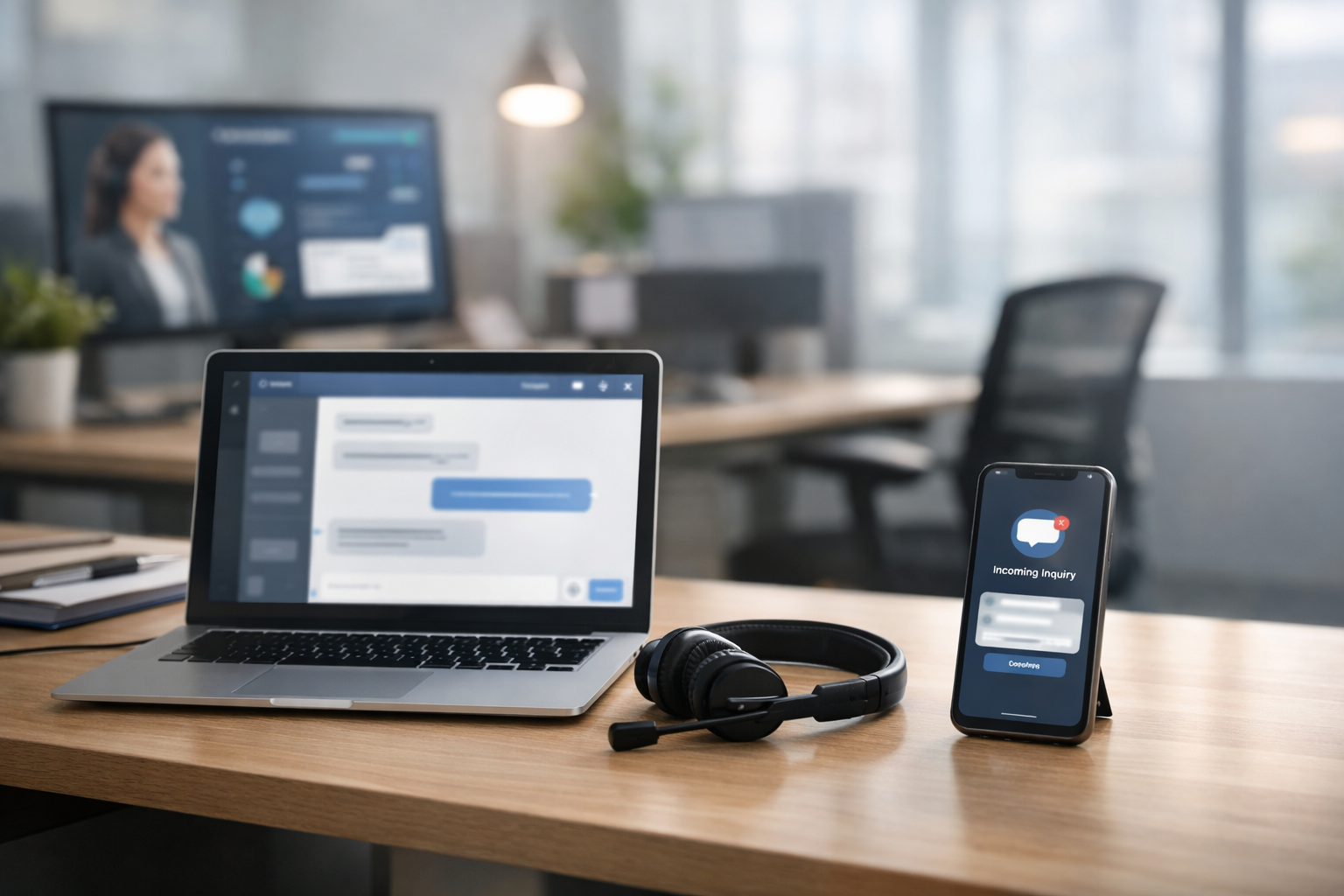
First response time is the moment of truth in digital sales. When a visitor raises their hand—through live chat, a website widget, or a call request—the speed of your first reply strongly influences whether they keep engaging or leave to a competitor. Understanding first response time and its impact on lead conversion rates helps you prioritize the right tools, staffing, and processes to turn more conversations into qualified leads.
First response time (often shortened to FRT) is the time it takes for your business to send the first meaningful reply after a prospect or customer initiates contact. Depending on the channel, it can be measured differently:
For lead generation, the most important part is “meaningful reply.” An automated “We received your message” confirmation can help, but it doesn’t replace an answer that addresses intent (pricing, availability, fit, next steps). Fast acknowledgement plus a helpful first message is what moves the conversation forward.
Lead conversion is often a race between three forces: the prospect’s urgency, their attention span, and competitor responsiveness. FRT influences all three.
Many website inquiries happen at peak intent: someone comparing options, checking pricing, or verifying whether you can solve a problem today. The longer the silence, the more that intent decays. A fast first response keeps the visitor in “decision mode” and increases the chance they’ll share details (budget, timeline, requirements) that allow you to qualify them.
In most industries, prospects use responsiveness as a proxy for reliability. If a company can’t respond quickly before money changes hands, prospects wonder what support will feel like after purchase. A prompt, clear response signals operational maturity and lowers friction.
When prospects don’t hear back, they don’t always “reject” you—they simply move on. By the time you respond hours later, they may have booked with someone else, stopped caring, or forgotten why they reached out. This shows up as lower chat-to-lead conversion, fewer booked meetings, and more abandoned forms.
FRT expectations are channel-specific—and they’ve become stricter as real-time chat has normalized instant answers.
These targets matter most during high-intent windows: business hours, evenings when people research, and weekends when your competitors may be offline. That last point is where 24/7 coverage can create a measurable conversion advantage.
To connect first response time and its impact on lead conversion rates, you need clean definitions and consistent reporting. Start with these metrics:
When you review results, look for patterns like: “FRT under 30 seconds produces more booked calls” or “Weekend FRT is 6 hours and weekend leads rarely convert.” Those insights point directly to staffing or automation fixes.
Slow response time doesn’t just reduce conversions—it creates operational drag. Common hidden costs include:
Improving FRT is one of the rare optimizations that can lift both top-line growth (more leads) and efficiency (less chasing).
Speed alone isn’t enough—responding quickly with vague or incorrect information can hurt trust. The goal is fast, accurate, and consistent first contact. Here are practical ways to achieve it.
A dedicated AI assistant trained on your website content can handle common questions instantly—pricing ranges, service areas, hours, qualifications, and next steps—while routing complex questions to human agents. This keeps FRT low even during spikes in demand.
Biz AI Last supports this approach with a single embeddable gadget that offers 24/7 AI chat plus live human agents for text, audio, and video. Explore our AI and human support services to see how hybrid coverage reduces wait times while improving lead capture quality.
Many businesses lose leads even with fast replies because the first response doesn’t move the conversation forward. A high-performing first response should:
This matters because the first response sets the tone: helpful, structured, and easy to continue.
Many sites get high-intent traffic after hours—especially B2C services, emergency requests, global audiences, and mobile visitors browsing at night. If you’re offline, your “first response time” becomes “tomorrow,” and your conversion rate often follows.
If full internal staffing isn’t realistic, outsourcing responsive coverage can be more cost-effective than hiring, scheduling, and managing a round-the-clock team. Biz AI Last offers lead capture and customer support starting at $300/month—view our pricing to compare options.
Long FRT is sometimes caused by uncertainty: agents searching for information, asking managers, or finding the right link. Fix this with:
A website-trained AI assistant can also reduce agent load by instantly surfacing accurate answers derived from your own site content.
Fast responses won’t convert if capturing details feels like work. Keep it simple:
The best-performing chat flows feel like a helpful conversation, not a form disguised as a chat.
If you want to prove the ROI of better first response time, run a 2–4 week test:
Even modest FRT reductions can create a noticeable lift because they affect the very top of the funnel—where the largest volume of opportunities exists.
Biz AI Last is designed for businesses that want faster first responses without compromising customer experience. With one embeddable gadget, you can offer:
If you want to see what a low-FRT experience looks like on your site, book a free demo. You’ll get a clear view of how reducing first response time can improve lead conversion rates—day or night.
Join businesses using Biz AI Last to capture more leads and deliver exceptional support around the clock.
See How Biz AI Last Works