Loading
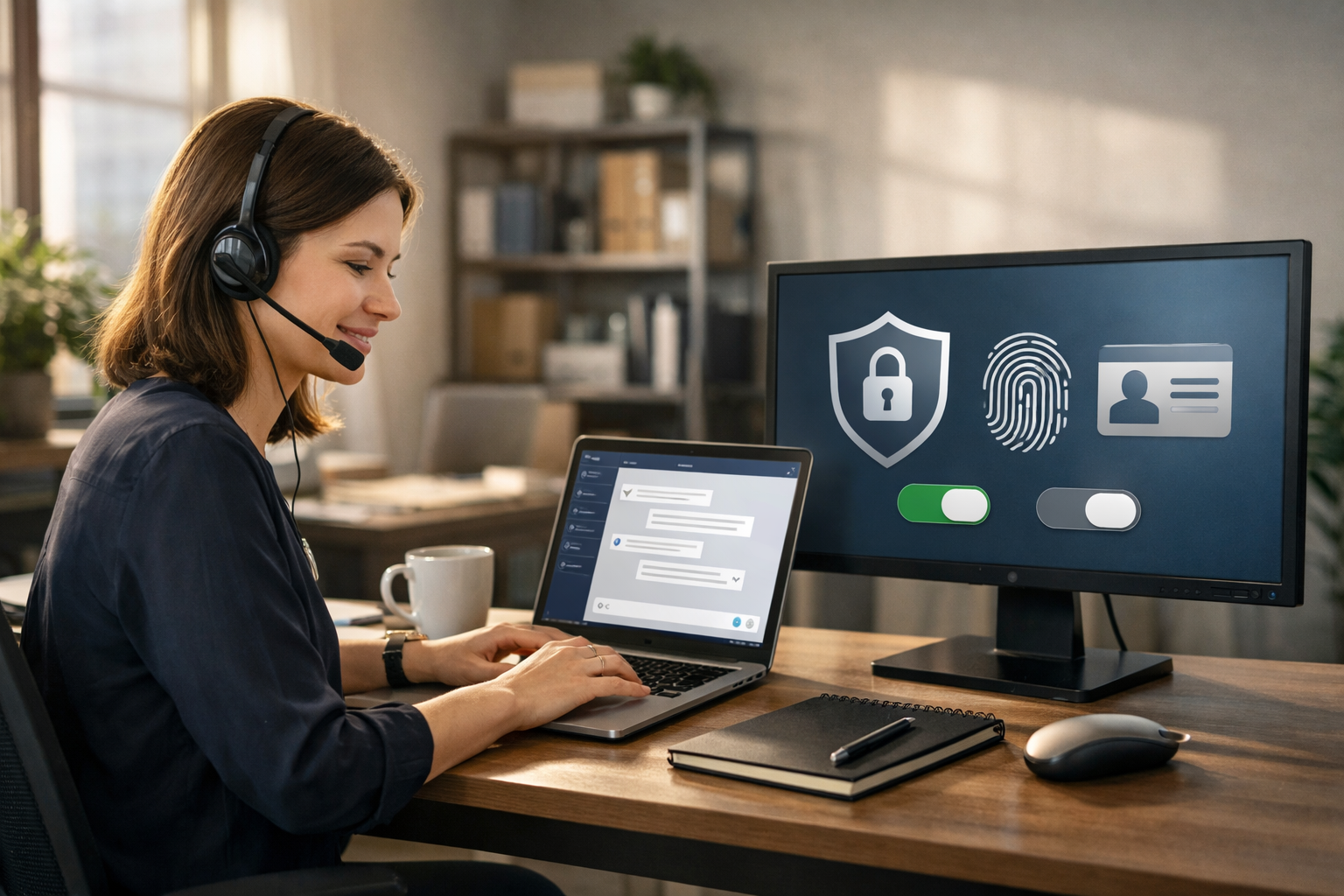
Live chat can be a growth engine—but under GDPR it’s also a data-collection tool that must be designed with privacy in mind. If your chat widget captures personal data, records transcripts, uses cookies, or routes conversations to third parties, you need clear controls for consent, transparency, retention, and security. This guide covers gdpr compliant live chat what you need to know, with a practical checklist you can apply today.
GDPR applies when you process personal data of people in the EU/EEA (and in many cases, when you market to or monitor EU visitors). Live chat routinely processes personal data such as names, emails, phone numbers, order numbers, IP addresses, and any information a user types into the chat. If the chat includes voice or video, you may also process audio/video data and potentially biometric information depending on the use case.
Non-compliance risks include regulatory penalties, customer trust damage, and operational disruption. The good news: most GDPR requirements map to sensible customer experience practices—clear expectations, data minimization, secure handling, and the ability to delete data on request.
There’s no single “GDPR compliant” badge—compliance is an outcome of your configuration, policies, vendor contracts, and day-to-day handling. For live chat, focus on these pillars:
Many businesses can rely on legitimate interests to offer live chat for customer service (especially when a visitor initiates a conversation). However, if you use chat data for marketing follow-up, profiling, or analytics beyond what users reasonably expect, you may need explicit consent.
Action: Document your lawful basis and keep it consistent with what your privacy policy and chat prompts tell users.
Live chat forms frequently ask for name, email, phone, company, and “anything else.” GDPR encourages data minimization: collect only what you need for the purpose at that moment.
Users should understand what will happen when they use chat. Provide a short notice near the widget (or in the pre-chat screen) that covers:
Tip: Keep the notice short with a link to your privacy policy for full details.
If your live chat uses non-essential cookies, marketing automation, or proactive chat that profiles users, you may need consent. Consent must be freely given, specific, informed, and unambiguous—no pre-ticked boxes.
Chat transcripts often contain more personal data than you expect (addresses, order details, complaints). Implement role-based access so only the right team members can view transcripts, and ensure encryption in transit and at rest where available.
GDPR requires you not to keep personal data longer than needed. Decide how long you truly need chat transcripts for support quality, legal obligations, or dispute handling.
If you use a live chat provider, you typically need a Data Processing Agreement (DPA) outlining responsibilities, security measures, breach notifications, and sub-processor disclosures. Also confirm where data is stored and how cross-border transfers are handled.
People may request a copy of their chat transcript or ask for deletion. Your process should make this straightforward and timely.
Hybrid setups—AI + human agents across text, audio, and video—can be powerful, but they expand your data footprint.
Biz AI Last is built for businesses that want a single embeddable gadget for 24/7 AI chat plus real human agents for text, audio, and video—without sacrificing professionalism or control. Your AI can be trained on your website content to give consistent answers, while human agents step in when nuance, empathy, or complex troubleshooting is needed.
If you’re evaluating GDPR-ready live chat operations, start by mapping what you collect, where it goes, and how long it stays—and then choose a support model that can scale responsibly. Explore our AI and human support services to see how hybrid coverage works, view our pricing (starting from $300/month), or book a free demo to discuss your compliance and support requirements.
Not always. If a user chooses to start a chat for support, legitimate interests or contract necessity may apply. Consent is more likely needed for non-essential cookies, marketing opt-ins, and certain tracking/profiling behaviors.
Often, yes. Even if a user doesn’t provide a name, transcripts can include identifiers (emails, order numbers, IP addresses, or unique details) that make the person identifiable.
Only as long as necessary for the stated purpose. Set a documented retention period (for example, 90 days for general inquiries) and delete or anonymize after that, unless you have a justified reason to keep them longer.
If you want GDPR compliant live chat, focus on: (1) lawful basis and transparency, (2) minimization and consent where required, (3) security and retention, and (4) vendor contracts and DSAR readiness. When those fundamentals are in place, you can confidently use live chat to improve customer experience and capture more leads—without privacy surprises.
Join businesses using Biz AI Last to capture more leads and deliver exceptional support around the clock.
See How Biz AI Last Works