Loading
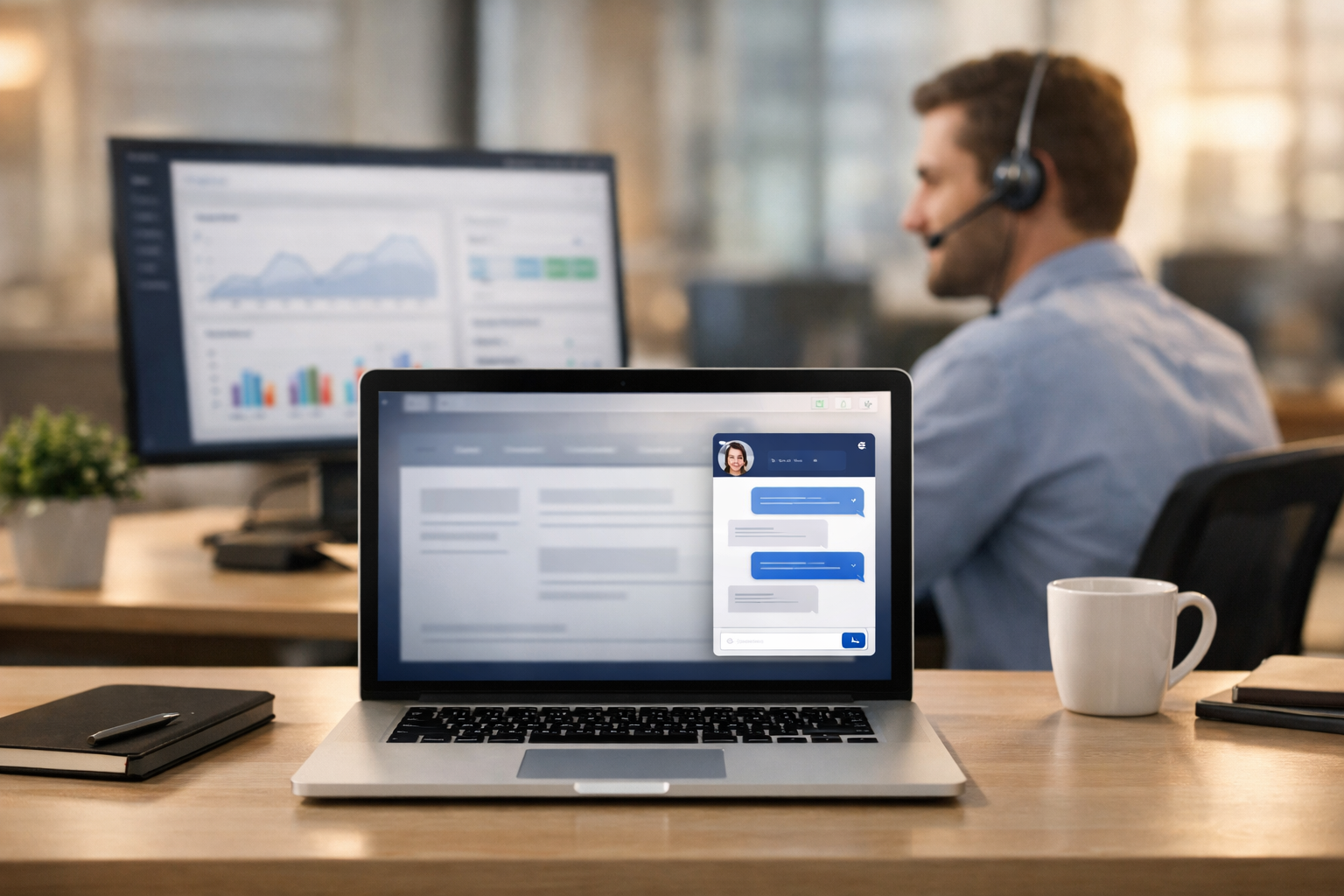
If your analytics show a high bounce rate, it often means visitors didn’t get what they needed fast enough—or they weren’t confident enough to take the next step. Real time visitor engagement fixes that gap by answering questions at the exact moment intent is highest, guiding visitors to the right page, and capturing leads before they disappear.
Bounce rate is the percentage of sessions where a visitor leaves after viewing only one page. It isn’t always “bad” (some pages satisfy intent quickly), but for most service businesses and lead-gen sites, a high bounce rate can point to friction such as:
Real time engagement reduces bounces by intercepting confusion and giving visitors a “human-like” path forward: instant answers, quick navigation help, and an easy way to talk to someone without hunting for a contact page.
The goal isn’t to pester every visitor—it’s to show up at the right moment with the right help. Here are proven approaches that lower bounce rates while improving lead capture and customer satisfaction.
Many chat widgets increase bounce because they pop up too aggressively. Use intent-based triggers instead:
Keep the opening message specific to the page. A pricing-page prompt like “Want a quick estimate or the best plan for your needs?” consistently performs better than “Hi, how can I help?”
Most bounces happen because visitors hit a question and don’t want to work to find the answer. Real time engagement should focus on your top “bounce questions,” such as:
This is where a website-trained AI chatbot is especially effective: it can pull accurate answers from your own site instantly, 24/7. When a question becomes nuanced (custom pricing, edge cases, or objections), handing off to a human agent keeps the conversation moving instead of stalling.
Biz AI Last combines both in one embeddable gadget—AI responses powered by your website content plus live agents for text, audio, and video chat. Explore our AI and human support services to see how this hybrid approach works in practice.
Visitors often bounce after landing on a blog post or a generic service page because they can’t find the specific next step. A strong engagement flow guides them with clickable options, for example:
When your chat experience can link directly to the best-fit page (or summarize the key info and offer a link), you reduce one-page sessions and increase page depth—two behaviors that typically correlate with lower bounce rates and higher conversions.
The same message won’t work for every visitor. Consider segmenting your engagement by:
On mobile, friction is higher (typing is harder, tabs are limited). Offering voice or video chat can reduce back-and-forth and create trust faster, especially for high-value services.
Sometimes the visitor isn’t ready to buy—but you can still prevent a “lost session” by capturing contact details ethically. Effective patterns include:
The key is to make lead capture feel like help, not a form. A hybrid system can qualify gently (needs, budget range, timeline) and then hand off to a human agent when the visitor shows buying intent.
A common source of high bounce rate is off-hours visits: people land on your site at night or weekends, see no immediate way to get answers, and leave. 24/7 engagement changes that. An AI assistant can handle the majority of questions instantly, while live agents can cover complex situations and convert high-intent visitors when it matters most.
If you’re comparing solutions, view our pricing to see how affordable always-on engagement can be compared to lost leads.
Measure beyond bounce rate alone so you can confirm you’re improving user experience (not just changing analytics behavior). Track:
Tip: run a simple A/B test—engagement on vs. off (or different triggers)—and compare bounce rate, page depth, and leads over the same traffic mix.
The best-performing setup is helpful first, sales second: clarify, guide, then offer the next step.
Pure automation can be fast but may struggle with nuance. Human-only chat can be excellent but expensive and hard to staff 24/7. A hybrid approach combines the strengths of both:
Biz AI Last is built for this exact outcome: reduce bounce rate with real time visitor engagement by meeting visitors where they are, any time, with a single embeddable gadget.
If you want to lower bounce rate and convert more visitors without adding friction, the fastest path is to deploy a hybrid AI + human chat experience that’s trained on your site and available 24/7. book a free demo to see how Biz AI Last can engage your visitors in real time, answer questions instantly, and capture leads while your competitors are still waiting for email replies.
Join businesses using Biz AI Last to capture more leads and deliver exceptional support around the clock.
See How Biz AI Last Works