Loading
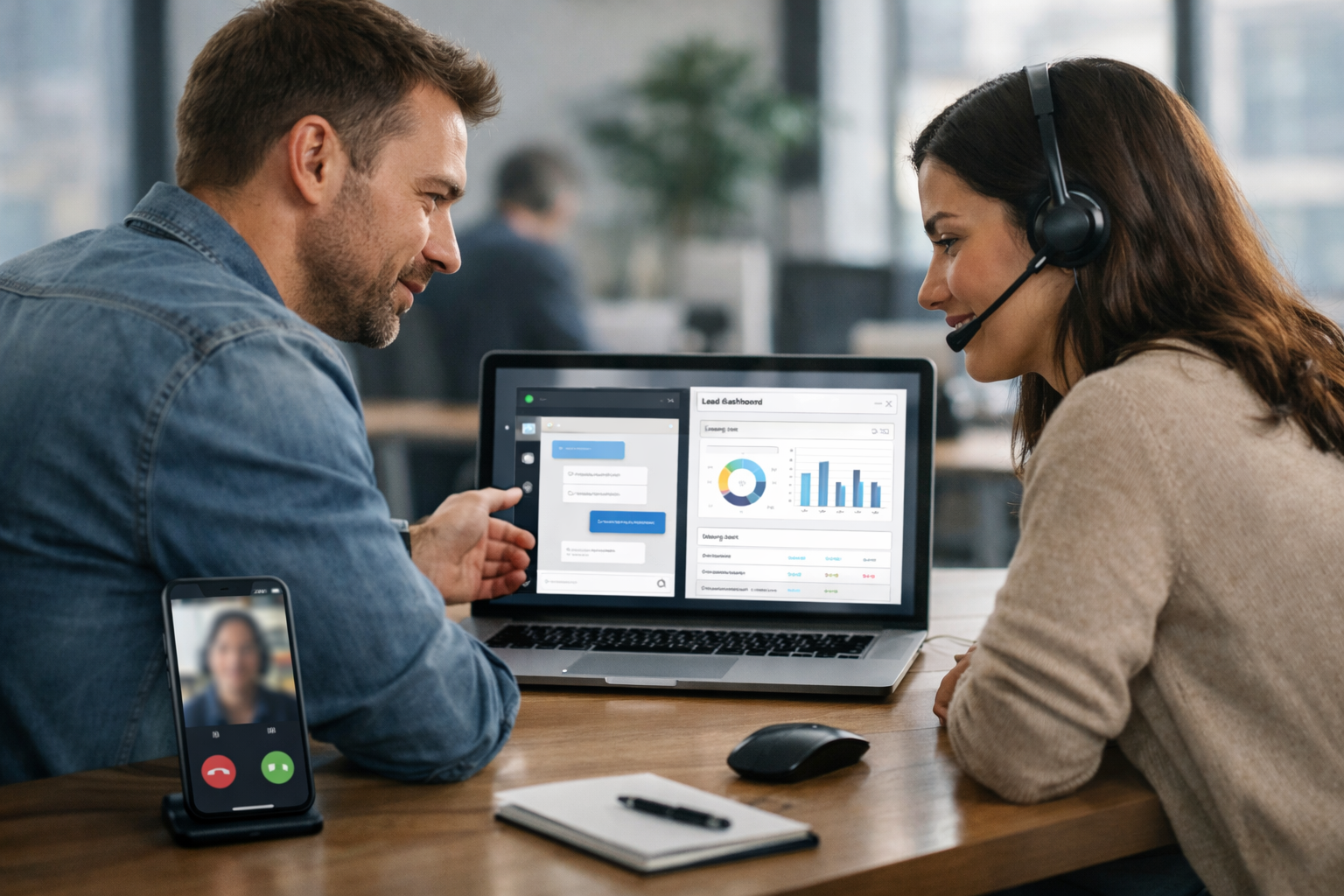
In 2026, “more traffic” isn’t the growth lever it used to be—better conversion is. Live chat has become one of the fastest ways to turn anonymous visitors into qualified leads, especially when it’s available 24/7 and can seamlessly switch from AI to a real person. Below are practical, proven live chat lead generation tactics that work in 2026, with examples you can implement this week.
Buyers expect immediate, context-aware answers. They also expect to move between channels—text, voice, and video—without repeating themselves. The winning live chat programs in 2026 share three traits:
Biz AI Last is built around this reality: a single embeddable gadget for text, audio, and video chat, with a dedicated AI trained on your website plus real human agents—available 24/7. You can explore our AI and human support services to see how this model supports both lead generation and customer support.
In 2026, generic “Hi, can I help?” pop-ups are easy to ignore. High-performing teams use intent-based triggers that match the visitor’s stage:
Example trigger copy: “Want help choosing the right plan? Tell me your team size and goal—I'll recommend the best fit.”
This works because it offers a clear outcome (recommendation) instead of a vague offer of help.
AI in chat wins on speed and consistency, but humans win on persuasion and edge cases. The tactic that works best in 2026 is a two-step flow:
This hybrid approach keeps response times near-instant while ensuring serious prospects get a professional, consultative experience. With Biz AI Last, your AI is trained on your own website content and backed by real agents for text, audio, and video chat—so prospects can talk to a person exactly when it matters.
Lead forms still work, but only when they’re short and well-timed. In live chat, the best approach is progressive profiling: capture the smallest useful detail first, then collect more only if the conversation is going somewhere.
Tip: Offer a “conversation benefit” before asking for contact info (e.g., a tailored recommendation, quote range, or implementation checklist). When value comes first, opt-in rates rise.
In 2026, many buyers prefer voice for speed and clarity, and video for trust—especially for high-consideration purchases. But pushing video too early can feel intrusive. The tactic is to offer voice/video at the moment of complexity:
Biz AI Last’s single gadget supports text, audio, and video chat with real human agents, so you can escalate naturally without sending prospects to another platform.
Most visitors aren’t ready to “book a demo” the first time. Micro-commitments convert because they’re easy and low-risk.
Once the prospect engages, it becomes much easier to capture contact details and schedule a follow-up.
Personalization in 2026 is less about knowing everything and more about using what the visitor is already telling you: the page they’re on.
Example: On a pricing page, try: “If you tell me your average daily site visitors, I can estimate how many chats (and leads) you might see monthly.”
Top chat teams don’t improvise lead capture—they standardize it. Create a checklist that defines what a “qualified lead” means for your business.
Then define handoff rules: when to offer a meeting, when to send a summary, and when to follow up asynchronously.
In 2026, “chat volume” is a vanity metric. The metrics that actually map to revenue:
Hybrid coverage tends to improve FRT and qualification simultaneously: AI reduces wait time; humans improve close rates.
A large share of high-intent browsing happens outside business hours. In 2026, the tactic is not merely “leave a message,” but capture mode:
This is where managed solutions can outperform DIY bots: you get continuous coverage without staffing your own overnight team. Biz AI Last starts at $300/month for lead capture and customer support—see details and options to view our pricing.
One of the most overlooked chat tactics is the post-chat summary. When prospects receive a concise recap, they’re more likely to reply and less likely to ghost.
If you’re handing off from AI to a human agent, the summary also reduces repetition and keeps the experience smooth.
If you want to move from “we have chat” to “chat generates pipeline,” follow this 7-day rollout:
The tactics above work best when your chat stack can cover every scenario: instant answers, human persuasion, and channel flexibility. Biz AI Last combines a dedicated AI trained on your website with real human agents for text, audio, and video chat—inside one embeddable gadget.
If you want to see how it would work on your site and what kind of leads you could capture, book a free demo.
Join businesses using Biz AI Last to capture more leads and deliver exceptional support around the clock.
See How Biz AI Last Works