Loading
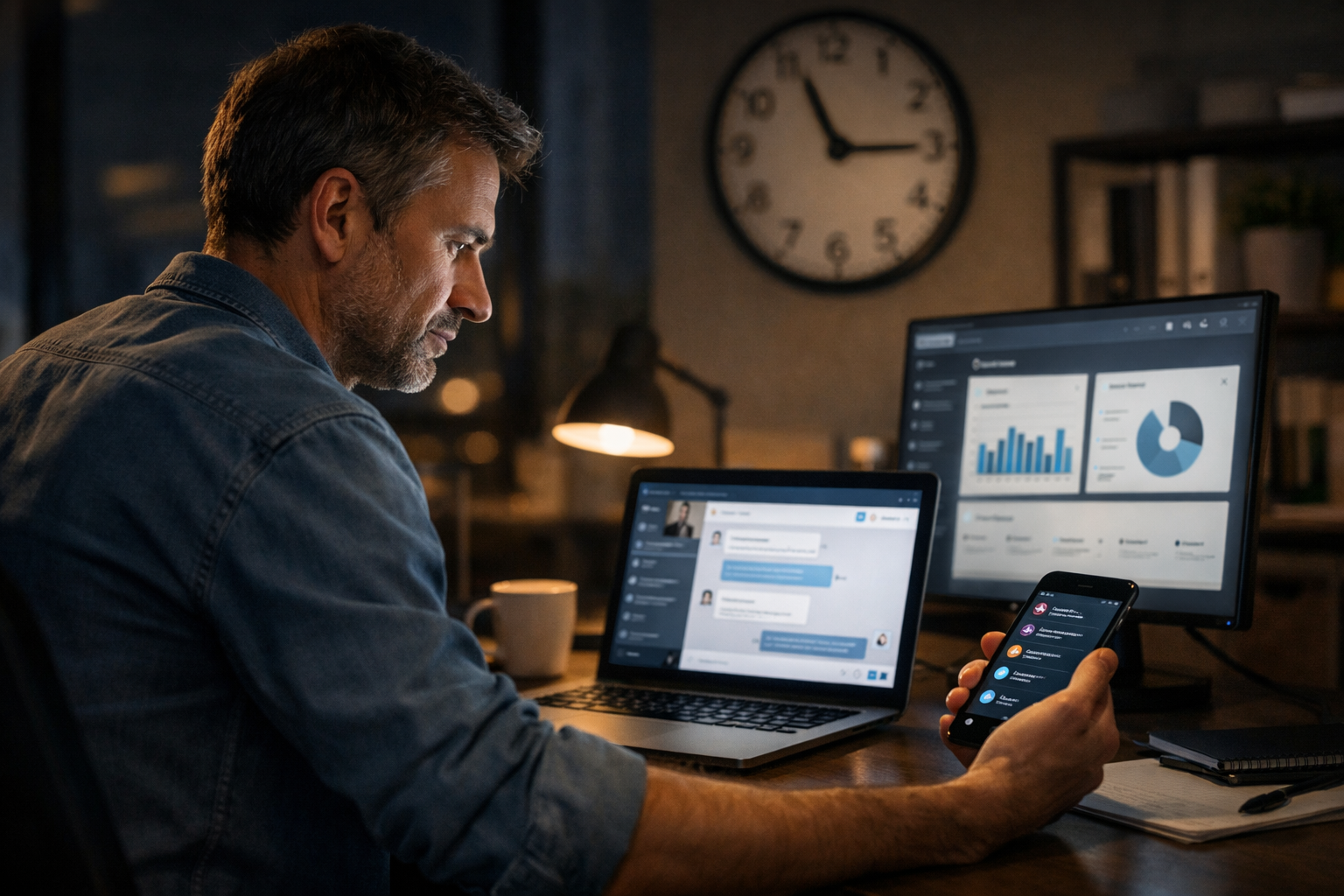
The cost of not having 24 7 customer support in 2026 isn’t just “a few missed messages.” It shows up as lost leads while you sleep, higher churn when customers can’t get help, and a slow erosion of trust that competitors gladly absorb. If your website can take orders and inquiries 24/7 but your support can’t respond, you’ve created a bottleneck that quietly drains revenue.
In 2026, customers don’t compare you to “similar businesses.” They compare you to the fastest, most frictionless experience they had this week—often delivered by companies that respond instantly through chat, voice, or video. Global audiences, remote work, and always-on digital buying behavior mean your peak traffic may happen outside your office hours.
Even for local businesses, the moments that matter—late-night research, weekend comparison shopping, urgent troubleshooting—don’t follow a 9–5 schedule. When you’re unavailable, customers don’t wait; they switch tabs.
Many website inquiries are time-sensitive: “Do you serve my area?”, “Can you deliver this week?”, “Is this compatible with X?”, “What’s the difference between these plans?” If those questions aren’t answered quickly, the visitor’s intent fades—or a competitor answers first.
Practical lens: If your site gets just 10 after-hours high-intent visitors per week and only 2 would have converted with instant support, that’s 8+ deals a month in play—before you factor in referrals and repeat purchases.
Conversion is often a confidence problem, not a product problem. Shoppers hesitate when details are unclear: shipping times, pricing tiers, contract terms, integrations, return policies, or onboarding steps. Without immediate answers, hesitation becomes abandonment.
In 2026, customers expect an interactive path to a decision—through text chat, and increasingly through voice and video for higher-consideration purchases.
When support isn’t available during the moment of frustration, customers escalate fast: chargebacks, cancellations, negative reviews, and “I’m done” emails. This is especially costly for subscription services, software, and any business where lifetime value matters.
24/7 coverage reduces the “time-to-relief” that keeps customers calm and loyal.
In 2026, reviews and social proof influence nearly every purchase. A slow or nonexistent response gets interpreted as indifference—even if you’re simply closed. “No one replied” is one of the most common drivers of negative sentiment.
The hidden cost is that reputation damage increases your cost per acquisition and lowers conversion across every channel.
Without 24/7 support, mornings become “catch-up mode.” Staff spend the first hours triaging urgent issues instead of progressing strategic work. Over time, this creates burnout and inconsistent customer experiences.
A hybrid approach—AI for instant triage plus humans for complex situations—reduces the load while keeping quality high.
Every after-hours question is valuable product and marketing feedback. If you’re not capturing and categorizing those conversations, you lose insight into objections, confusing pages, missing features, and pricing friction.
You don’t need perfect data to get a useful estimate. Start with three numbers:
Rough estimate: (After-hours high-intent visitors) × (conversion lift from instant response) × (value per conversion). Then add churn reduction: number of urgent issues after-hours × percentage that would churn × customer LTV.
Most businesses discover the monthly cost of “being offline” is far higher than a practical 24/7 solution.
Not all “24/7” is equal. Customers can tell when a chatbot is generic, limited, or fails to escalate properly. In 2026, the standard is:
What it shouldn’t be: a script-only bot that deflects, frustrates, and drives customers away.
Biz AI Last is built for businesses that want always-on coverage without hiring, scheduling, and managing a 24/7 internal team. You get a hybrid model: a dedicated AI trained on your website plus real human agents available for text, audio, and video conversations—all delivered through a single embeddable gadget.
If you want to see how it fits your site and customer journey, explore our AI and human support services. For a straightforward view of what it costs to get coverage, view our pricing.
The cost of not having 24 7 customer support in 2026 is measurable—and preventable. Once you map after-hours demand and identify where customers drop off, you can recover revenue, reduce churn, and protect your reputation with an always-on hybrid support model.
Want to see what 24/7 AI + human coverage looks like on your website? book a free demo and we’ll walk through the best setup for your customers, your hours, and your goals.
Join businesses using Biz AI Last to capture more leads and deliver exceptional support around the clock.
See How Biz AI Last Works